
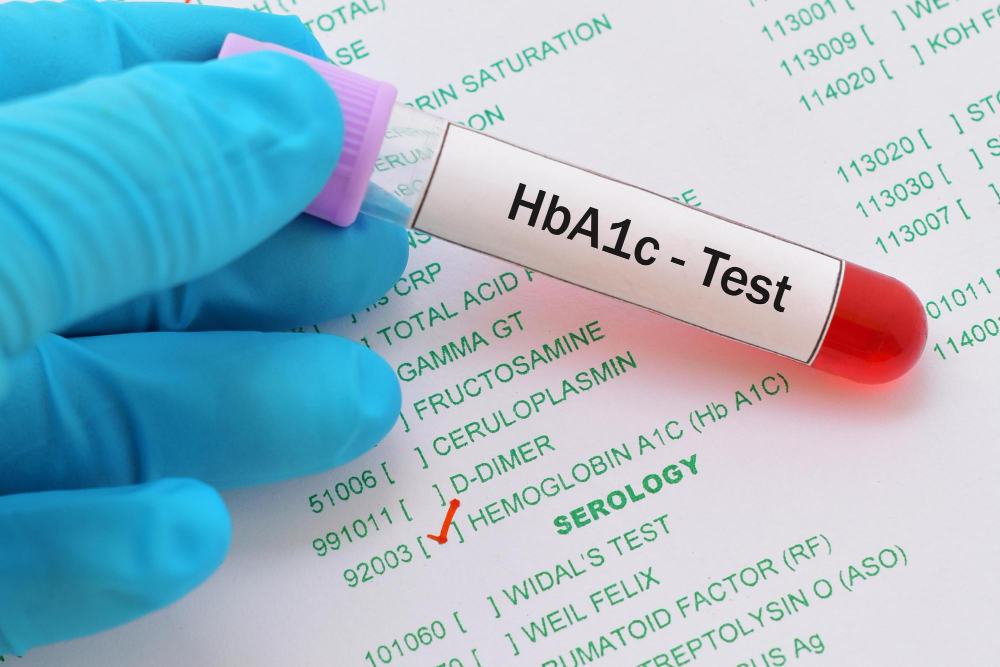
What is HbA1c?
HbA1c is a simple blood test. It shows your average blood sugar over 90 days. Doctors use it to check how well you manage your blood sugar. The test is also called the A1c test or glycated hemoglobin test. When sugar sticks to your red blood cells, it forms HbA1c. Because red blood cells live for about three months, this test gives a long-term view of your blood sugar control. So, understanding your HbA1c helps you track your diabetes management.
Why is HbA1c Important?
HbA1c is important because it shows your long-term glucose levels. Unlike daily finger-prick tests, it gives a bigger picture. For example, a single high or low reading does not affect your HbA1c much. Instead, it reflects your average blood sugar over 90 days. This helps your doctor see if your treatment is working. In addition, keeping your HbA1c in a healthy range lowers your risk of diabetes problems. These problems can include heart disease, nerve damage, and kidney issues. According to the CDC, good blood sugar management can prevent many of these complications.
How is HbA1c Measured?
Measuring HbA1c is easy. First, a healthcare provider takes a small blood sample. This can be done at a clinic or lab. Next, the sample is tested to see how much sugar is attached to your red blood cells. The result is shown as a percentage. For example, an HbA1c of 6% means 6% of your red blood cells have sugar attached. Most people with diabetes should aim for an HbA1c below 7%, but your target may differ. Always ask your doctor what is best for you.
Understanding Your HbA1c Results
It is important to know what your HbA1c number means. Here is a simple guide:
However, your doctor may set a different goal based on your age or health. For example, older adults or those with other health issues may have a higher target. But, keeping your HbA1c close to your goal helps prevent long-term problems. If your HbA1c is high, it means your average blood sugar over 90 days has been too high. In that case, you may need to adjust your treatment plan.
Tips to Manage Your Average Blood Sugar Over 90 Days
Managing your blood sugar takes daily effort. Yet, small changes can make a big difference. Here are some tips:
Additionally, making small, steady changes is often easier than big ones. Over time, these habits can help lower your HbA1c.
Prevention and Lifestyle Guidance
Even if you do not have diabetes, you can take steps to keep your HbA1c in a healthy range. For instance, eating healthy foods and staying active help prevent high blood sugar. Also, keeping a healthy weight lowers your risk. If you have a family history of diabetes, regular check-ups are important. Moreover, avoid smoking and limit alcohol, as both can affect blood sugar. The World Health Organization also recommends regular physical activity for everyone.
When to Consult a Doctor
Sometimes, you may need extra help. If your HbA1c is higher than your goal, talk to your doctor. Also, see your doctor if you notice symptoms like extreme thirst, frequent urination, or blurry vision. These can be signs your blood sugar is too high. In addition, if you feel weak or confused, seek help right away. Your doctor can adjust your treatment or suggest new ways to manage your blood sugar. Regular visits help keep your HbA1c and health on track. Schedule your test at Orbit Diagnostic Centre and take control of your health today!